By GiveGrove• 7 min read • Published 2026
Selling event tickets and running your silent auction on the same platform gets more of your guests bidding. By the time bidding opens, every ticket holder already has an account, already has the link, and is probably still signed in on their phone. On GiveGrove, ticketing and the silent auction sit on one event page, so the parent who bought two tickets in September is a tap away from bidding in October.
Most event committees don't think about this when they pick a ticketing tool. Tickets feel like logistics and the auction feels like fundraising, so the tickets go on Eventbrite or the school's payment portal and the auction goes somewhere else. Nobody notices the cost until bidding opens and a chunk of the room has to stop and make an account before they can place a bid.
Why does selling tickets on a separate platform cost you bidders?
Every step between a guest and their first bid loses a few people, and a separate ticketing platform adds several of those steps. The guest bought a ticket on one site, then gets an email weeks later with a different link, lands on a different site, and has to make a second account with a second password before they can bid on the wine basket they wanted.
That sounds minor until you look at how silent auctions actually raise money. Across GiveGrove auctions, revenue tracks bidders, and bidders come from people who looked at the auction page. The median event turns about half of its page viewers into bidders, but that rate runs anywhere from 15% to 85%. Most of that spread comes down to how well an organization promotes its auction. We'd argue the rest is friction, and a second login on bid night is about as much friction as you can add.
Ticket buyers are also your warmest audience. They've already spent money on your cause and blocked off the night. Sending them to a new platform asks your most committed supporters to start over.
What carries over when guests buy tickets on GiveGrove?
When a guest buys a ticket on GiveGrove, they set up the same GiveGrove account they'll use to bid. GiveGrove requires an account to buy tickets and to bid, so the ticket purchase takes care of the hardest step in getting someone to bid. Everything else builds on that.
| Before a guest can bid | Tickets sold on another platform | Tickets sold on GiveGrove |
|---|---|---|
| Account | Creates a GiveGrove account on bid night | Already made one when they bought the ticket |
| Link | Finds a new link in an email | Uses the same event link they bought tickets from |
| Phone | Signs in fresh | Usually still signed in on the same phone |
| Text reminders | Needs a separate texting tool, or gets none | Already on your text-blast list if they opted in when they made their account |
| Auction preview | Can't see items until the new link goes out | Can browse items on the event page before bidding opens |
The text list matters more than it looks. A quarter of all silent auction bids on GiveGrove come in the final hour, and a closing-hour text is one of the best ways to set that off. Ticket buyers who signed up for texts are already on your list, and GiveGrove doesn't charge extra to text them.
Your event URL goes on the save-the-date, the ticket confirmation, the program, and the table cards. When it's the same link for tickets, the auction and donations, nobody has to hunt for the right one, and nobody ends up on last year's page.
It also helps that GiveGrove guests often aren't new to the platform. About 38% of bidders at a typical GiveGrove event have bid on GiveGrove before, so some of your ticket buyers will already have an account from another local event.
How do you preview a silent auction before bidding opens?
On GiveGrove, publishing your auction page and opening bidding are two separate steps. That lets you put your items in front of ticket holders weeks ahead while keeping the actual bidding window short.
Keeping bidding short is deliberate. GiveGrove's data from 213 completed silent auctions shows the strongest results come from bidding that runs about three to five days. Auctions left open for two weeks or more raise roughly half as much, because most people watch and wait, and a long window just stretches out the quiet middle.
Someone who bought tickets in September can browse the auction page in October, show their spouse the lake weekend, share the link with a coworker, and come back ready when bidding opens. And because they bought their ticket on the same event page, they don't need a new account or a new link to do any of it.
A preview is also a reason to contact ticket holders between the purchase and the event, which is usually a long, quiet stretch. "Auction items are up, bidding opens Thursday" gives people something to look at and a date to put on the calendar.
What does an all-in-one event page look like?
Chicago Voyagers' Fall Fest shows what this looks like in practice. Chicago Voyagers is a nonprofit that mentors Chicago youth through outdoor adventure programs, and it held Fall Fest on October 25, 2026 at Caldwell Woods, in the Forest Preserves of Cook County. The Fall Fest event page on GiveGrove put everything in one menu bar: tickets, peer-to-peer fundraising, the silent auction and donations. A guest who bought a Fall Fest ticket found the auction one tab over, under the same link and the same login.
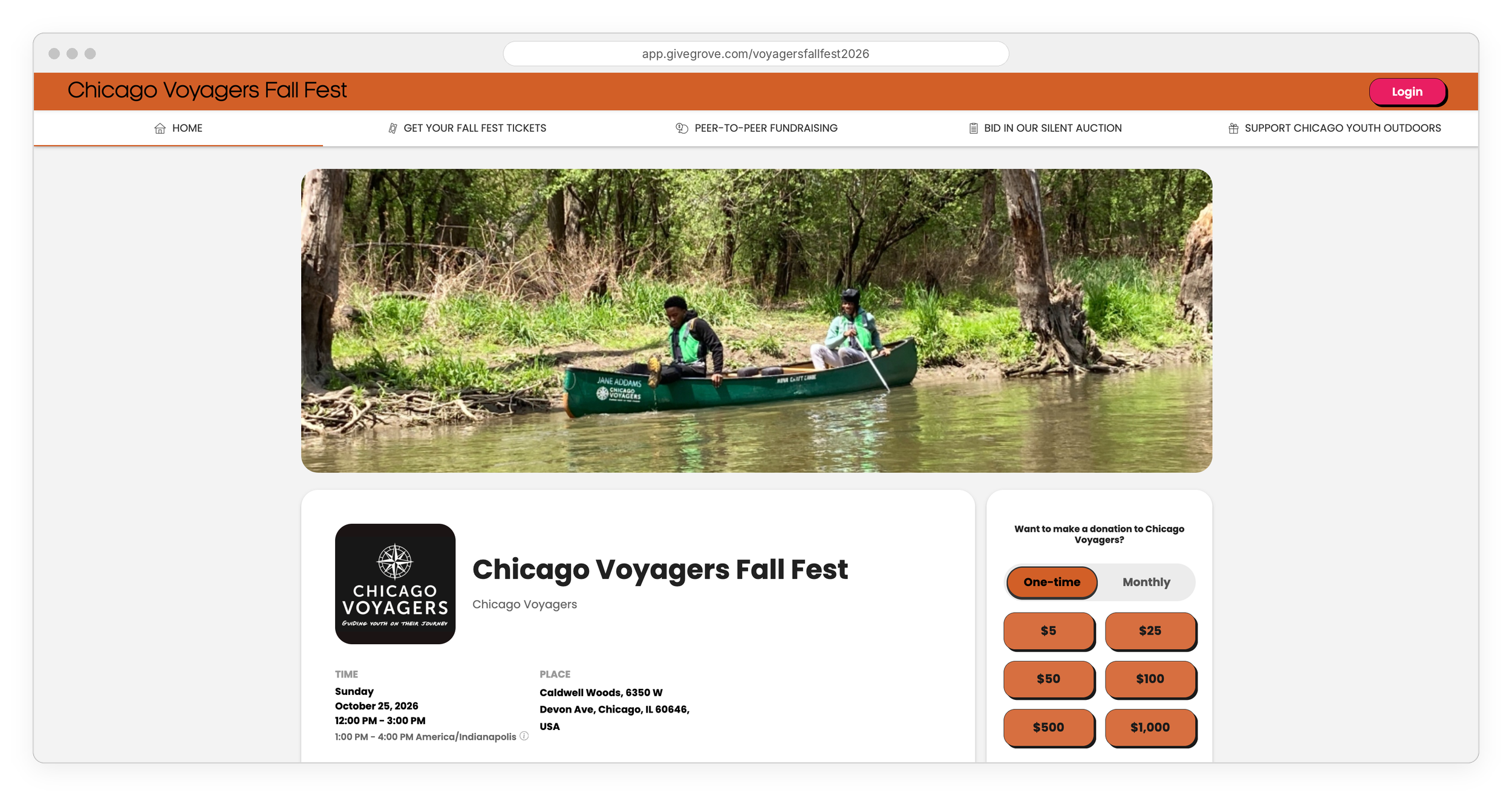
Chicago Voyagers' Fall Fest 2026 event page on GiveGrove, with tickets, peer-to-peer fundraising, the silent auction and donations on one page.
Loud for the 22 shows that a ticket doesn't have to mean admission. The 13-hour Request-A-Thon ran on Veterans Day 2026, and its organizers used GiveGrove ticketing to sell song requests instead of seats: $22 for a song request and shout-out, or $122 for the "Big Dog Donation." The Loud for the 22 event page also ran a silent auction from the same link, with 26 items closing November 13, so anyone who bought a request already had the account they'd need to bid.
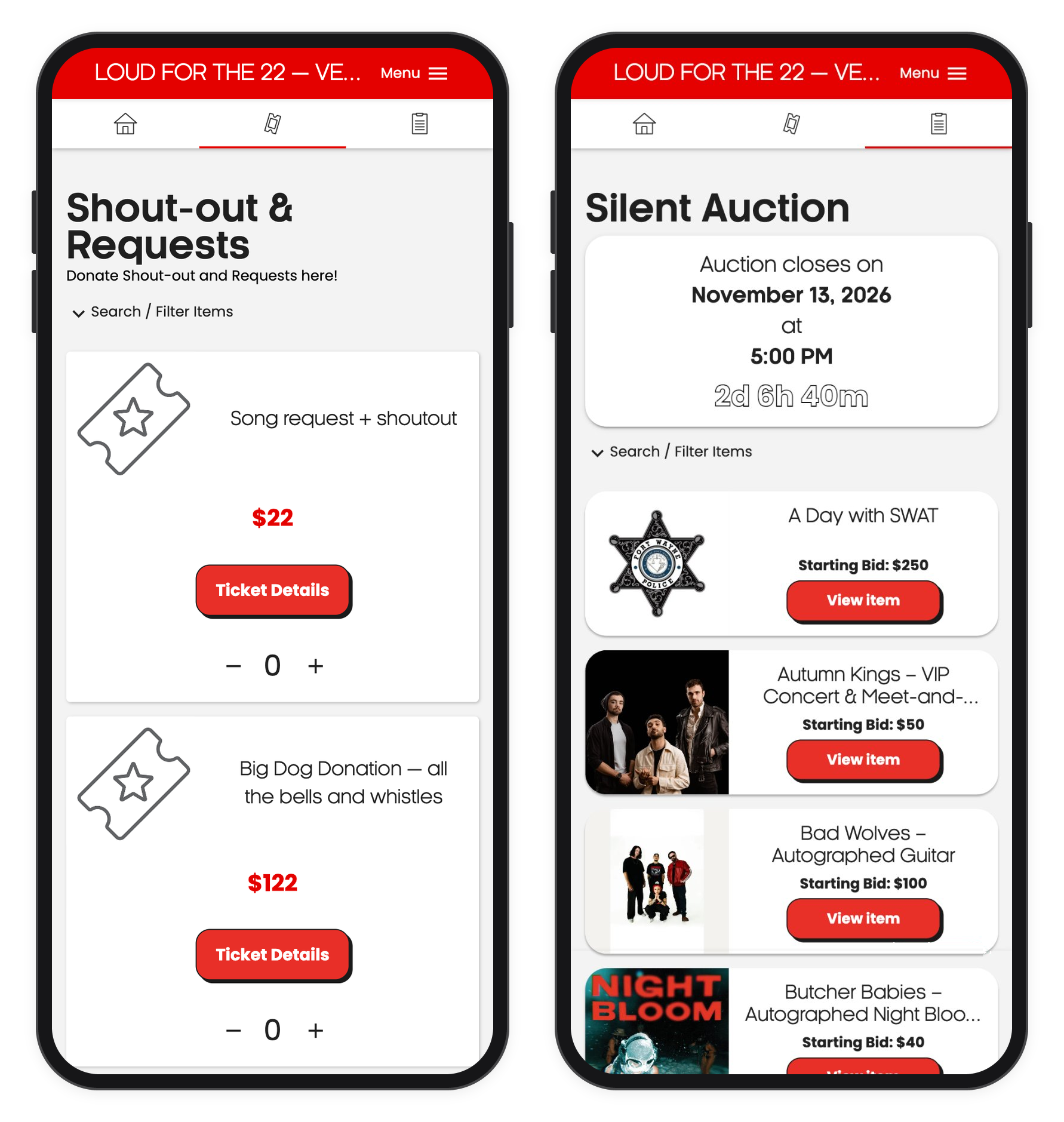
Loud for the 22's Shout-out & Requests tab and silent auction tab on GiveGrove, one tab apart on the same event page.
How to sell tickets in advance and run the silent auction on one GiveGrove page
The setup follows the order your guests will move through it. Tickets go up first, the auction page goes up next as a preview, and bidding opens last.
Build the event in GiveGrove and turn on ticketing. If you sell sponsorships, each level can be its own ticket with a price and description, right next to general admission.
Publish ticket sales and share the event link everywhere you'll promote the event. This is the link guests will use for everything that follows.
Add your silent auction items, each with a starting bid and a market value, and publish the auction page so ticket holders can browse.
Schedule bidding to open about three to five days before it closes, and set the auto-close for before the in-person event ends so you can announce winners and hand out items while people are still in the room.
Text and email ticket holders when bidding opens, around the halfway point, and in the final hour.
Most of the work here is work you'd do anyway. The difference is that every reminder in step 5 goes to people who already have an account and already know where to click.
If you're planning a fall festival, gala or golf outing for 2026 or 2027 and still picking a ticketing tool, start with that question: where will your guests bid, and how many steps away is it from where they bought their ticket? If you'd like help setting up tickets and an auction on one page, the GiveGrove team is happy to walk through it with you.
Frequently asked questions
Can you sell event tickets and run a silent auction on the same platform? Yes. GiveGrove is a fundraising event platform that handles ticketing, silent auctions, live auctions and donations from one event page and one link. Guests buy tickets and bid with the same account.
Do guests need a GiveGrove account to buy tickets? Yes. GiveGrove requires an account to buy tickets and to bid in silent or live auctions. When a guest buys a ticket, that same account is ready for bidding later, so they don't have to sign up again.
Can supporters who don't attend still bid in the silent auction? Often, yes. Many organizations open their GiveGrove auction to supporters who can't make the event. The Logansport High School Alumni Association, for example, opened its gala silent auction to bidders anywhere in February 2026 and said attendance wasn't required to bid.
How long should a silent auction be open for bidding? About three to five days. GiveGrove's data shows auctions in that window raise the most, while auctions open two weeks or longer raise about half as much. You can still publish the auction page earlier so ticket holders can browse the items before bidding opens.
GiveGrove makes events and auctions for fundraising easy. Email info@givegrove.com for more info. Click here to sign up for our mailing list.