How the Center for the Homeless Turned Local Employers into a Peer-to-Peer Fundraising Team
By GiveGrove• 5 min read • Published 2026
A few years back, the chief information officer of a local health system agreed to learn to dance in front of a sold-out ballroom. He was upfront about it. He was a beginner, and two minutes on that floor made him nervous. Then he thought about who the night was for, and his nerves started to look pretty small next to what a family feels the week they lose their home.
That's Dancing with Our Stars, the signature fundraiser for the Center for the Homeless in South Bend. Every year, people with day jobs and no real business on a dance floor spend weeks in lessons with professional instructors, then perform at the gala. In the month before, each of them asks everyone they know for votes, at $45 apiece, through their own page on GiveGrove.
People come for the dancing. Most of the money comes from those votes, and a lot of them are cast long before anyone shows up in sequins.
Why the votes matter more than the dancing
Each dancer is paired with a professional instructor, and the winner is decided by votes. Every vote is a donation to the Center.
Think about who that reaches. A gala ticket gets you the people in the room. A vote link gets you a dancer's college roommate three states away, or the vendor who has worked with her for ten years and would never think to buy a seat at a gala. Every dancer turns into a fundraiser with an audience the Center couldn't reach on its own.
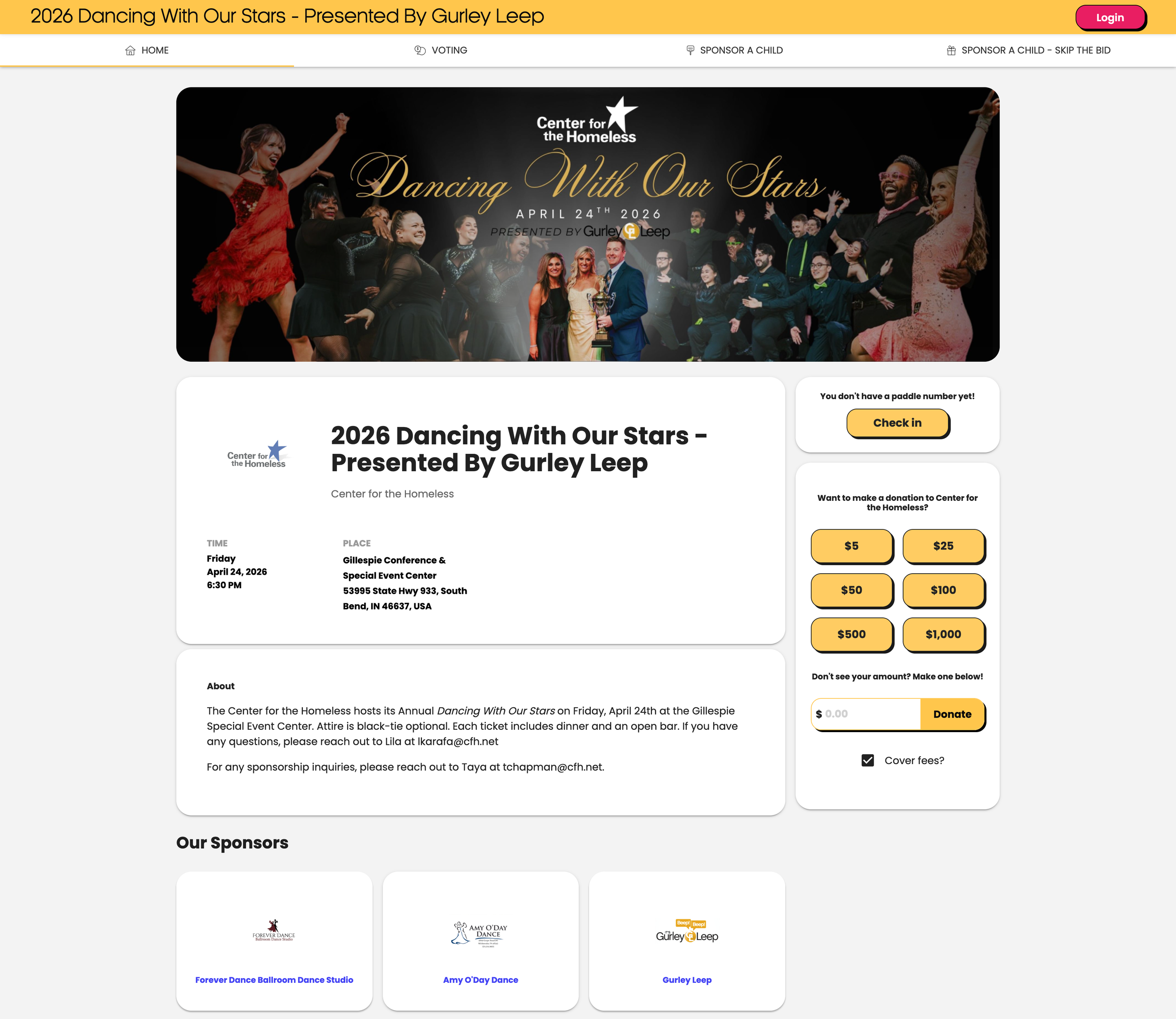
Where the dancers come from
The Center doesn't hold auditions. It calls the companies and organizations that already support it and asks a simple question: does anyone on your team want to dance?
It's a smart ask, because a dancer never shows up alone. Coworkers vote to back one of their own. Bosses sponsor. Clients and vendors chip in because it's an easy way to show up for a partner. A company that used to know the Center as a line in the sponsor program suddenly has someone in the race, and a whole office keeping an eye on who's ahead.
Past dancers have come from places like Beacon Health System and the University of Notre Dame. The CIO from the top of this story was one of several Beacon employees who took a turn on the floor over the years.
If you want to try this, open your sponsor list before you write a single invitation. You're looking for one person at each partner who knows a lot of people and doesn't mind looking a little silly.
$45 a vote, and why that number
GiveGrove lets each host set its own vote price. The Center chose $45, and it didn't pull that number out of thin air.
For years, the Center has priced a vote at roughly what it costs to care for one guest for one day. It was $39 one year and $43 in 2020. So when a dancer asks for a vote, they're asking for something you can picture: a bed, a few meals, and a day of support for someone working their way back. Past dancers spelled it out for their friends. One vote covers a day. Seven cover a week.
There's a practical side, too. Forty-five dollars is easy to give on a whim, and a few dozen of them add up quickly.
If you're setting your own price, try tying it to something real in your work, like a hot meal or a week of after-school care. It gives your participants an easy, honest ask, and it's a lot harder for their friends to scroll past.
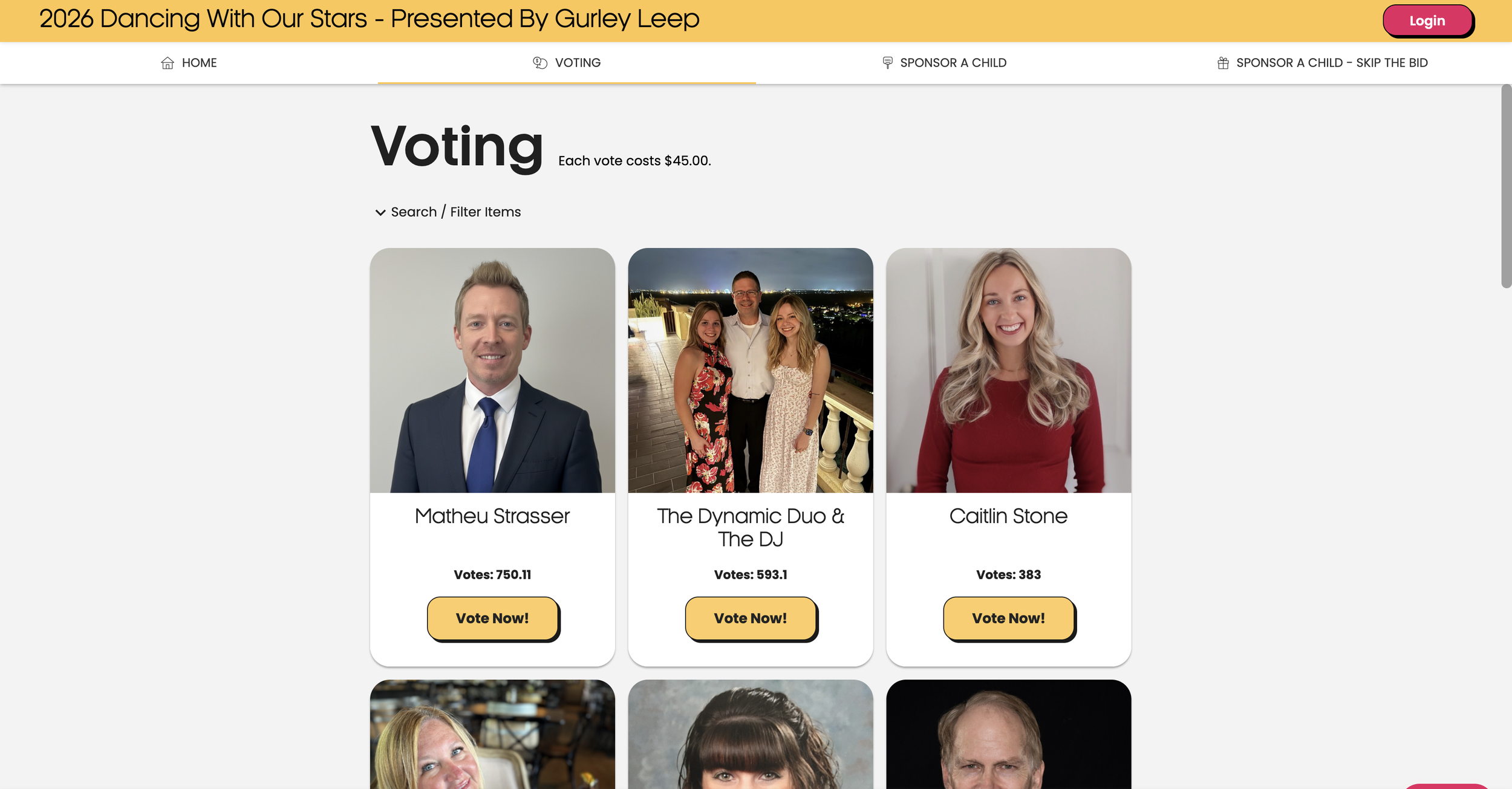
Setting it up in GiveGrove
The setup is lighter than most people expect. The Center creates the event, adds a voting page, and sets up each dancer as a team. Every team page gets a photo, a short bio and its own link, and that link is what the dancer sends around by email, text, Facebook and the office group chat. Votes land on the dancer's page and on the event leaderboard the moment they come in.
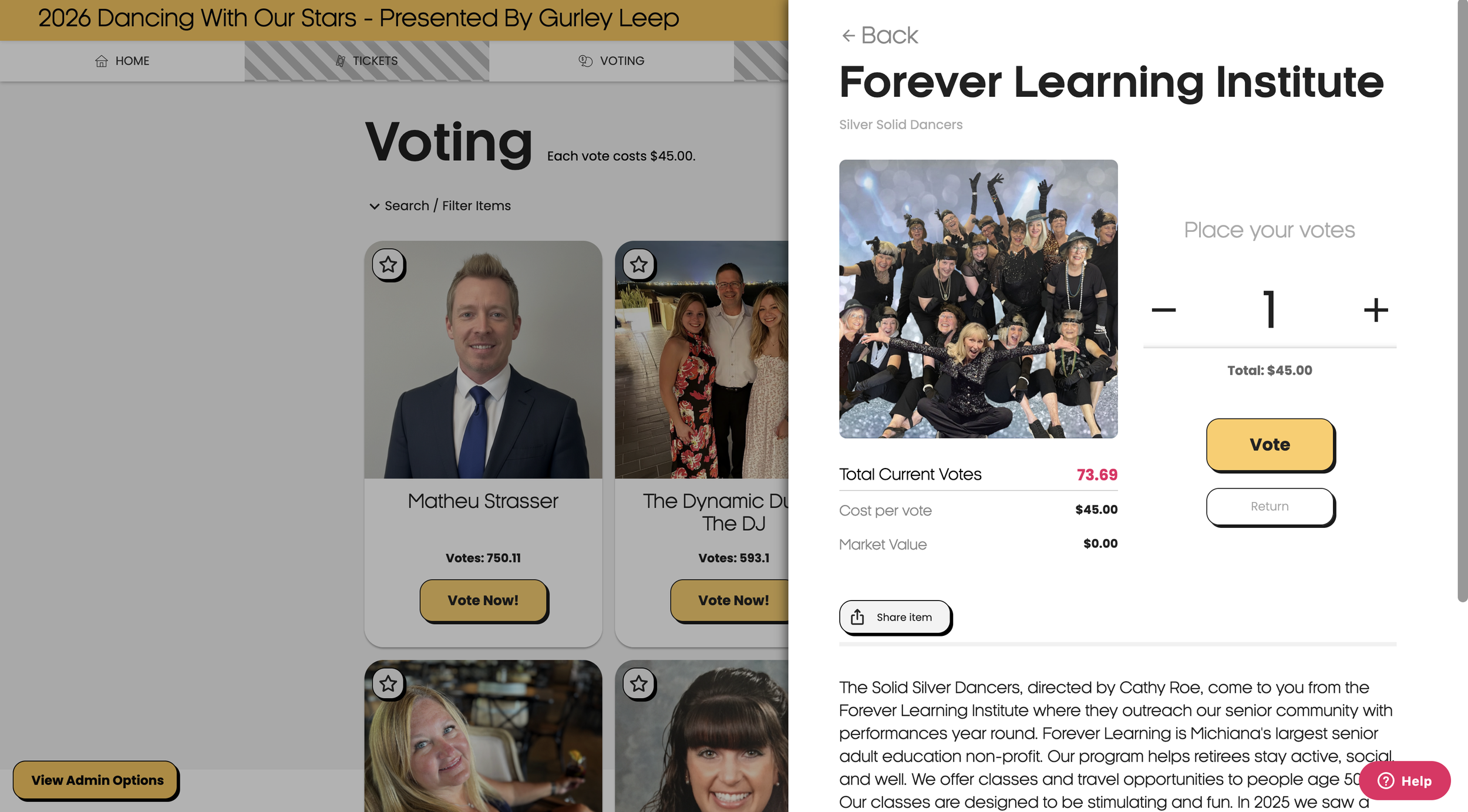
You also get to decide what the leaderboard shows, a vote count or dollars raised. For a dance-off, votes make it feel like a scoreboard, which is how the Center ran its leaderboard. If you'd rather people watch the money add up, switch it to dollars.
Since every online vote is a donation processed through GiveGrove, nobody on staff is stuck reconciling spreadsheets the week before the gala. The real-time reporting dashboard shows where every dancer stands.
The last hour
Online voting does most of the work, but the gala is where it gets loud. Somebody's coworkers decide their dancer cannot possibly lose to accounting. Checkbooks come out. A few twenties get pressed into a volunteer's hand.
GiveGrove's offline voting means none of that gets lost. Staff can add cash and check votes straight to a dancer's total, so the big screen shows what's actually happening in the room. That money never runs through GiveGrove's payment processing, so GiveGrove doesn't take a cent of it.
A dancer who's $300 behind at 8:30 can see it. So can table six.
Making it your own
You don't need a ballroom. The same setup works for a chili cook-off, a bake-off, a mustache contest, or a principal who has promised to kiss a pig if the school hits its goal.
What makes it work for the Center is pretty simple once you look closely. They pick dancers for who they know rather than how they move. Every vote stands for something concrete. Voting opens weeks early, so the gala feels like a finish line instead of the whole race. And when the night comes, the room gets a say in how it ends.
If you have a few partners who'd be good sports, GiveGrove can help you build the voting page. Drop us a note and tell us what your version of the dance floor looks like.
GiveGrove makes events and auctions for fundraising easy. Email info@givegrove.com for more info. Click here to sign up for our mailing list.