By GiveGrove• 9 min read • Published 2026
He only came because his neighbor bought a table for the food bank gala and needed somebody for the eighth seat. Before dessert, he couldn't have told you much about the food bank. Then one of the volunteers stood up and talked about a grandmother she loads groceries for every Thursday, a woman who drives 40 minutes each way to get them. The auctioneer opened the paddle raise at $1,000, and three paddles went up at the next table. When the ask came down to $250, his was up too.
So why do people give at fundraising events? Usually because a friend asked them to come, they can see everyone around them giving, the need has a face, they're having a good time, and giving takes about five seconds. Researchers have spent decades studying why people donate, and what they've found lines up with that night almost point for point.
If you're planning a gala or auction, each of those is something you can build in on purpose. Our own numbers from more than 150 live auctions on GiveGrove give a sense of what that's worth.
Why do people give at fundraising events?
The short answer is that an event puts almost everything known to drive generosity in the same room on the same night. When philanthropy researchers René Bekkers (VU Amsterdam) and Pamala Wiepking (Indiana University's Lilly Family School of Philanthropy) combed through more than 500 studies on charitable giving, they boiled the findings down to eight mechanisms: awareness of need, being asked, costs and benefits, altruism, reputation, the good feeling giving brings, personal values, and believing the gift will actually make a difference.
Think about how many of those an appeal letter can reach from a mailbox. Maybe two. A gala gets to most of them before anyone has finished the salad. Guests hear about the need from someone who lives it, they're sitting next to the friend who invited them, they can see who's raising a paddle, and honestly, it just feels better to give in a room full of people doing the same thing.
Does being asked really make people give?
Yes, more than almost anything else. When the UK's Institute of Fundraising and YouGov surveyed donors, 81% said they'd given after being asked, and about 30% admitted they wouldn't have given at all if nobody had asked. The flip side shows up in the US: in GivingTuesday's 2025 GivingPulse survey, about half of Americans couldn't remember being asked to give.
Events run on personal asks long before the doors open. A board member calls around to fill a table, or a neighbor needs somebody for the eighth seat. Our guest at the food bank gala was there because of that second kind of ask, which put him halfway to his paddle before the program even started.
Peer-to-peer fundraising takes the same idea and hands it to your supporters. For the Center for the Homeless's "Dancing with Our Stars" gala in South Bend, local employers sent dancers, and their coworkers turned out to back them (read how they did it). The Boys & Girls Clubs of Elkhart County's BBQ & Brew Fest had 26 local teams, each pulling in its own friends, families and coworkers, and every one of those $1 votes was a donation (full story). On GiveGrove, every team or contestant gets a page to share, so the request comes from someone the donor already knows.
Does seeing others give make people more generous?
It does, and it's been measured. A 2025 review of 113 studies covering more than 100,000 people in 22 countries found that people give more when giving looks like what others do, and what they should do. In one crowdfunding experiment with 24,070 people, showing donors what others had given raised the average gift by about 17%. Those donors were reading numbers on a screen, while your guests get to watch it happen across the table.
Paddle raises lean on this hard. Somebody at the next table goes first, then two more, and the guest who was on the fence isn't deciding alone anymore. GiveGrove's data points the same way. Events that ran a live auction (on GiveGrove, that includes the paddle raise) brought in a median of $34,774 for the whole event, compared with $4,332 for events without one. That's a comparison, not a promise: the events that run live auctions tend to be larger galas whose donors expect the ask. In a typical paddle raise, about a third of paddle holders give, and at the strongest events it's 40% to 45%.
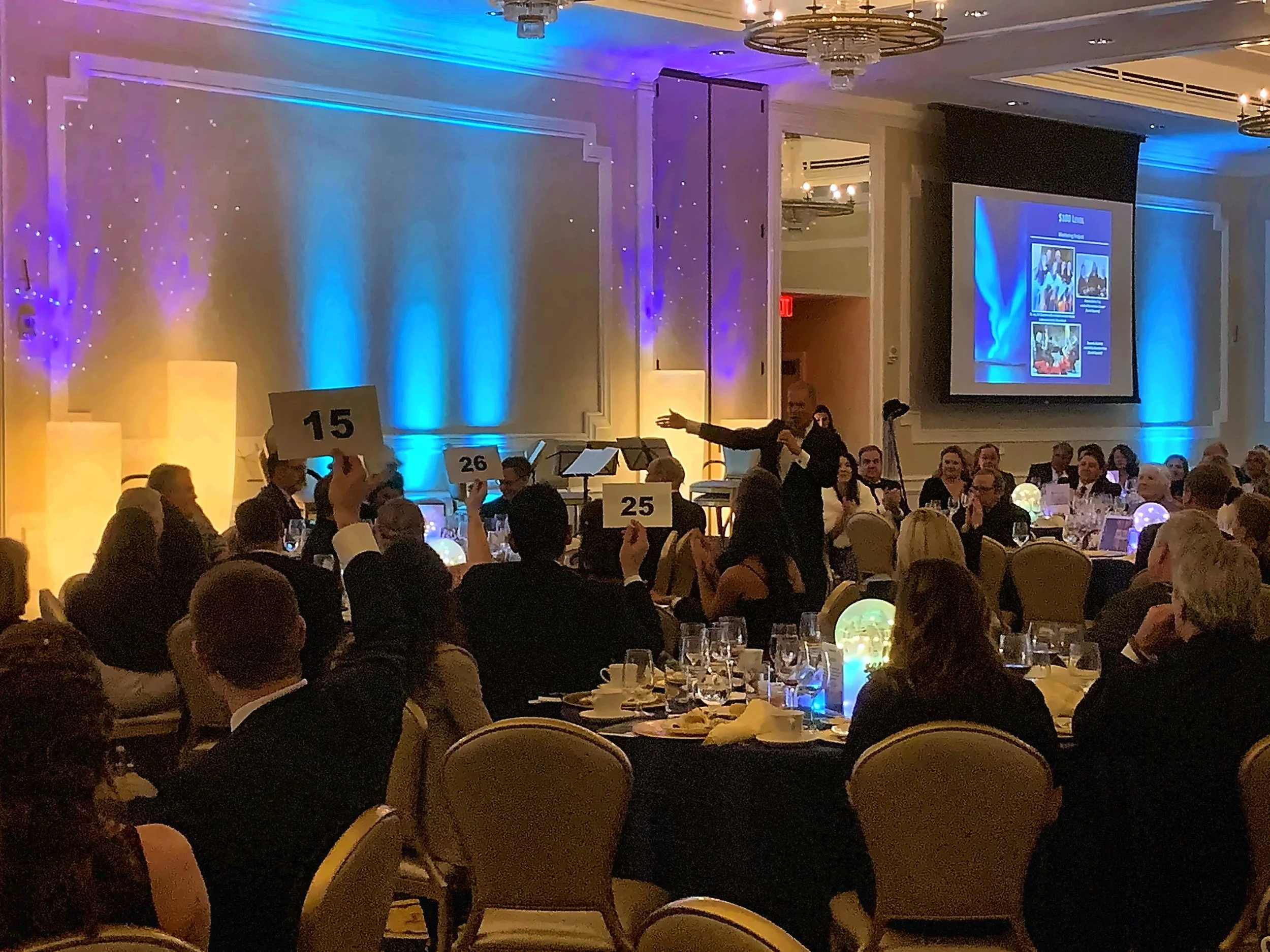
A screen helps, too. When guests can watch the paddle raise total creep toward its goal, or see where the peer-to-peer teams stand, they know the room is giving and how close it is. GiveGrove's Big Board display exists for that moment (more on running a paddle raise).
[SCREENSHOT: GiveGrove Big Board showing a paddle raise total and goal progress on a projector screen at a live event. Alt text: "GiveGrove Big Board showing live paddle raise total at a fundraising event"]
Why does one story raise more than a statistic?
People can picture one person. They can't picture 12,000 households. In a well-known set of experiments, Deborah Small, George Loewenstein and Paul Slovic had people read either about Rokia, a seven-year-old girl, or about famine statistics, and the Rokia group gave more than twice as much. When the researchers put the statistics next to her story, donations went down.
An event lets you put that one person in the room. The volunteer talked about the grandmother and her 40-minute drive, and the auctioneer opened the paddle raise the moment the volunteer sat down.
The paddle raise gets stronger when it's tied to that story. Rather than asking for "general support," give each giving level something specific to pay for, like a week of groceries for one family at $250 or a refrigerated truck at $10,000. A concrete goal helps too, like "ten paddles at $1,000 puts the truck on the road."
Is giving at an event actually fun?
For a lot of people, yes, and there's brain research behind it. University of Oregon researchers scanned people's brains and found that watching money go to a charity lights up the same reward areas as getting money yourself, and the response is stronger when the gift was a free choice. Economists call it the "warm glow." Add a band and your friends at the table, and the glow gets brighter.
You can see it plainly at an auction. Whoever wins the lake-cabin weekend gets a trip they wanted and gets to feel good about what they paid for it. The bidding war in the last ten minutes of a silent auction is half the night's entertainment, and about a third of items on GiveGrove sell for more than their stated value, since the difference goes to the cause.
A little competition helps, especially when it's local. With peer-to-peer voting, supporters buy votes for their favorite team, dancer or chef, and each vote is a donation. At the BBQ & Brew Fest, a $1 vote was an easy impulse buy, and watching 26 team totals climb gave everyone a reason to buy one more. Nobody wants their team finishing behind the crew from across town.
How easy does giving need to be?
Easier than most events make it. Bekkers and Wiepking count the cost of giving among their eight mechanisms, and a lot of that cost has nothing to do with money. Hunting for a pen or standing in a checkout line at 10 p.m. gives a generous impulse plenty of time to wear off.
By the time the paddle raise starts, the event has already done the hard part, and the only job left is to stay out of the way. If guests register before dinner and someone enters charge requests while the paddles are still going up, each gift reaches the guest's phone before they leave. Our guest at the food bank gala never had to flag down a volunteer with a clipboard. He raised his paddle, paid the charge request when it showed up on his phone, and went back to his coffee.
Don't forget the last half hour. On GiveGrove, winning silent auction bids are charged automatically when bidding closes, so nobody spends the end of a great evening waiting in line to pay. Live auction gifts go out as charge requests, and they're easiest to collect while guests are still in the room. Supporters who couldn't come can still bid and give online, too, which lets the event reach people who never set foot in the ballroom.
How to plan a fundraising event around why people give
Almost all of this can be planned, and the planning starts weeks before anyone puts on a nice jacket.
It starts with who's doing the asking. Table captains and peer-to-peer teams are worth recruiting early, and each of them needs a personal page plus a short message they can send without having to rewrite it. The food bank asked ten longtime volunteers to fill a table of eight apiece, which is how our guest ended up in that seat.
The silent auction can start before the night does. On GiveGrove, auctions with three to five days of bidding earn the most, so bidding can open online a few days ahead and build toward a close at the event. A quarter of all bids land in the final hour, so closing while guests are still mingling, before the live auction starts, leaves time to hand out items. The story goes right before the paddle raise. One person, told by someone who knows them, is plenty, and the slide of annual statistics can live in the program book.
A few lead gifts lined up in advance mean the first paddles go up fast at the top level, which gives everyone else permission to follow. Once they do, put the total on a screen. The food bank's paddle raise was for a refrigerated truck, and the auctioneer called out every $1,000 as the Big Board climbed.
The end of the night counts as much as the program. If every guest registers before dinner, silent auction wins charge automatically, and paddle charge requests go out during the program, people leave happy instead of annoyed. A thank-you the next morning that says exactly what the room paid for goes a long way toward getting them back next year.
Frequently asked questions
What motivates people to donate to charity?
Research points to eight main drivers: awareness of a need, being asked, the costs and benefits of giving, altruism, reputation, the good feeling giving creates, personal values, and confidence that the gift makes a difference. That list comes from René Bekkers and Pamala Wiepking's review of more than 500 studies. Being asked is one of the most powerful, and most gifts follow a direct request.
Do people give more at events than online?
Events tend to draw larger gifts in the moment because they combine a personal invitation, a live story, visible giving by others and an easy way to give. Online giving reaches more people and works year-round. Most nonprofits do best using both, and letting supporters who can't attend bid and give online during the event.
Why do paddle raises work so well?
Paddle raises work because guests see each other give, which makes it easier for the next person to join in. On GiveGrove, events that ran a live auction (which includes the paddle raise) brought in a median of $34,774 for the whole event, compared with $4,332 for events without one, though larger galas are the ones most likely to run one.
How do you get guests to give more at a gala?
Invite guests through people they know, tell one specific story right before the ask, secure a few lead gifts so the first paddles go up quickly, and show a live total on screen. Removing friction helps too: have guests register a card ahead of time and give from their phones.
Is peer-to-peer fundraising effective for events?
Yes. Peer-to-peer fundraising lets supporters ask their own friends and coworkers, and people are far more likely to give when asked by someone they know. Team-based formats, like peer-to-peer voting where each vote is a small donation, add friendly competition that keeps people giving before and during the event.
Plan for the guest in the last seat
Nobody at the food bank gala expected our guest to give $250, least of all him. Plenty of people at your next event will show up the same way, there for a friend or a night out, and whether they leave as donors has a lot to do with how the evening is built. If you're planning a gala, auction or peer-to-peer event this season, reach out and we'll walk through how GiveGrove can help you set it up.
Thanks for trusting GiveGrove with your fundraisers!
The GiveGrove Team 🍋
A Code Works company
GiveGrove makes events and auctions for fundraising easy. Email info@givegrove.com for more info. Click here to sign up for our mailing list.